Do the work you were actually promoted to do.
Most senior leaders spend under 15% of their week on the most important work they were hired to do. Not from a lack of discipline, but from an operating system nobody ever designed.
Find out which of the four components is holding yours back. Fifteen questions, about five minutes.
Your score appears immediately. No email required to see it.
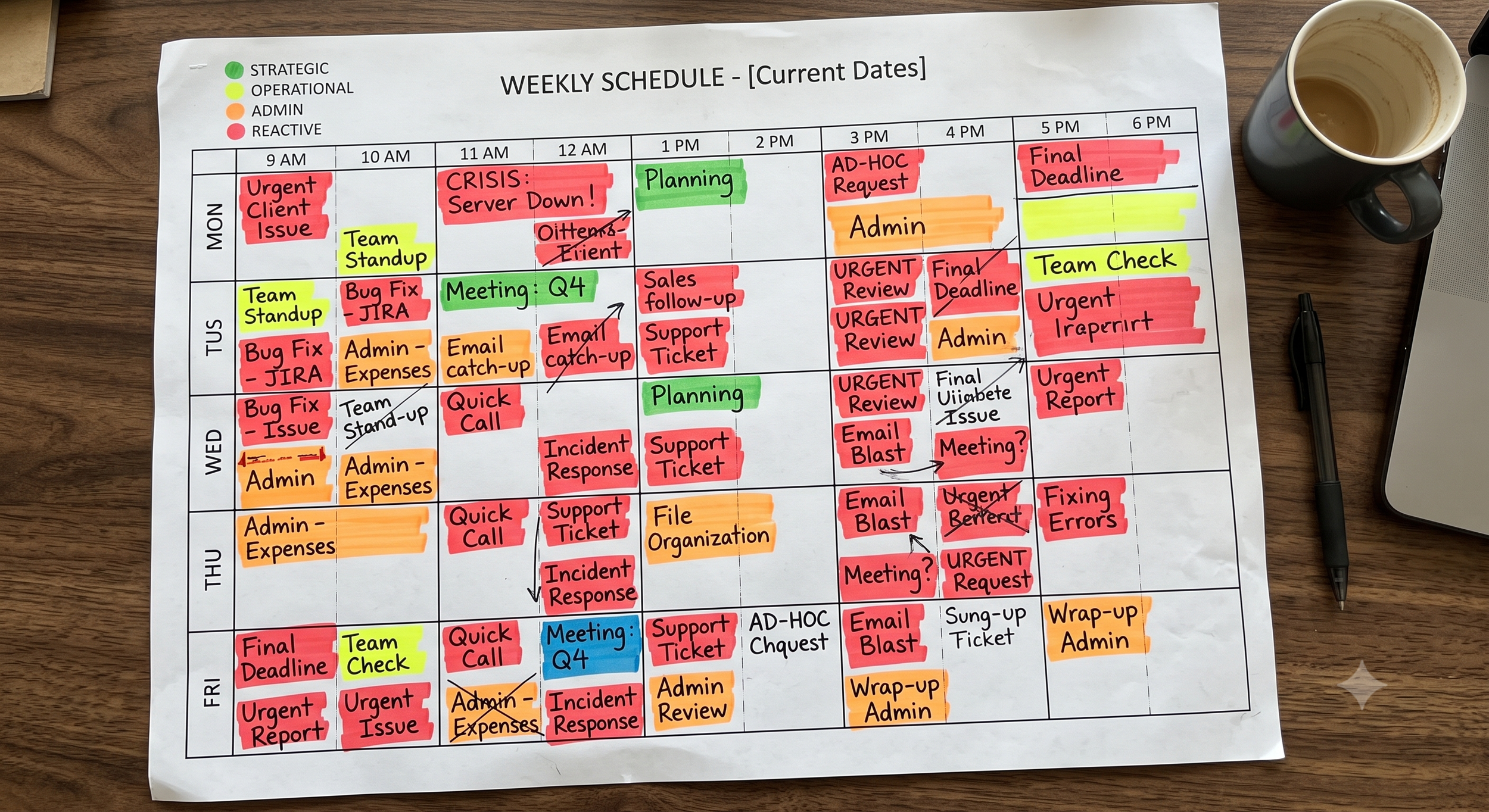
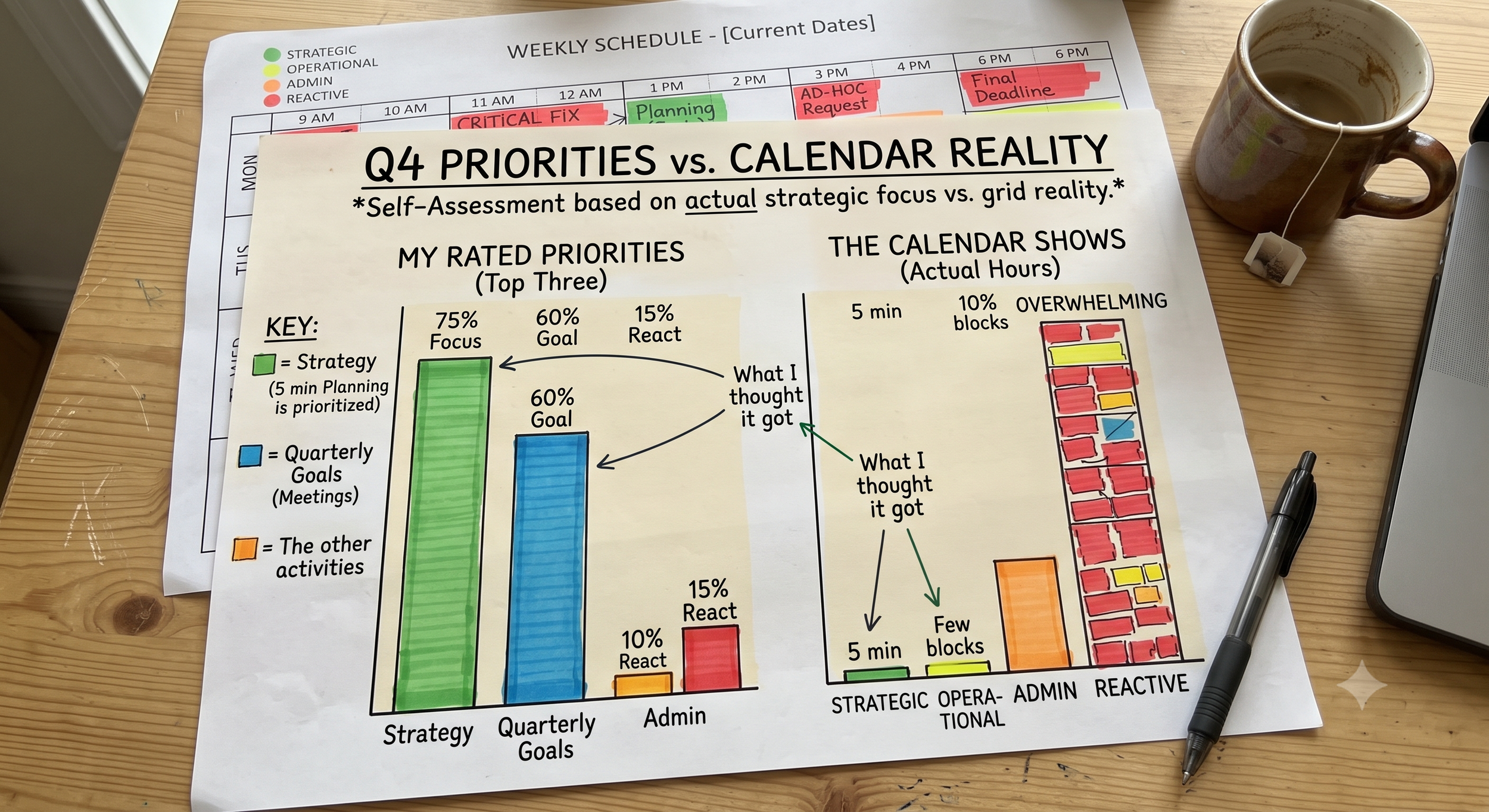
Nobody designed this. It accumulated.
A director started and added you to their weekly report. A crisis two years ago left behind an escalation path nobody ever closed. A recurring meeting outlived the reason it was created. Each of those took thirty seconds and needed approval from no one, and removing any of them costs you a conversation.
So it only grows, and it grows in one direction. Approvals, escalations, quick questions, meetings where you are present but not deciding. Every demand on your week is defensible on its own. Only the total is indefensible, and nobody is looking at the total except you.
Which leaves the part nobody says out loud: you are not sure whether this is the job or whether it is you. Being the person it all routes through does not feel like a problem. It feels like being needed, which is uncomfortably close to feeling competent. A dependency and an importance are almost impossible to tell apart from the inside.

I do this from the inside.
I'm Bob Stanke and I am a Chief of Staff. It is the role companies create when an executive's operating system has outgrown them: deciding what reaches the principal and what does not, keeping decisions moving, finding the work sitting on their desk that belonged three levels down, making a week match a strategy.
I spent years being the person everything routed through before I understood it was a design problem rather than a workload problem. I have spent the twenty-five years since turning work that runs on memory and willpower into systems that run on their own.
Most executives will never get a Chief of Staff. There are a few thousand of those roles in the country and hundreds of thousands of leaders with the same problem. That gap is the work.

The Plan in three steps.
1. Measure it.
Fifteen questions, five minutes. You get a score across all four components and, more usefully, the one that is actually causing you problems.
2. Fix the constraint, not the symptom.
The four components run in sequence, and the whole system moves at the speed of the tightest one. Most executives fix the wrong component and watch the improvement evaporate within a month. You get the specific first move for yours.
3. Install it so it holds.
Written rules instead of willpower. The test of any change is whether it survives a bad month, and willpower does not.

If you don’t make a change, here is what another year of this looks like.
Next quarter is this quarter with more accumulated on top of it. The strategic work stays undone, and eventually somebody notices it was yours.
The gap between what you can do and what your team can do widens every month, so every handoff you postpone gets more expensive rather than less.
And your strongest people leave. Not because of workload, but because the work stopped teaching them anything.
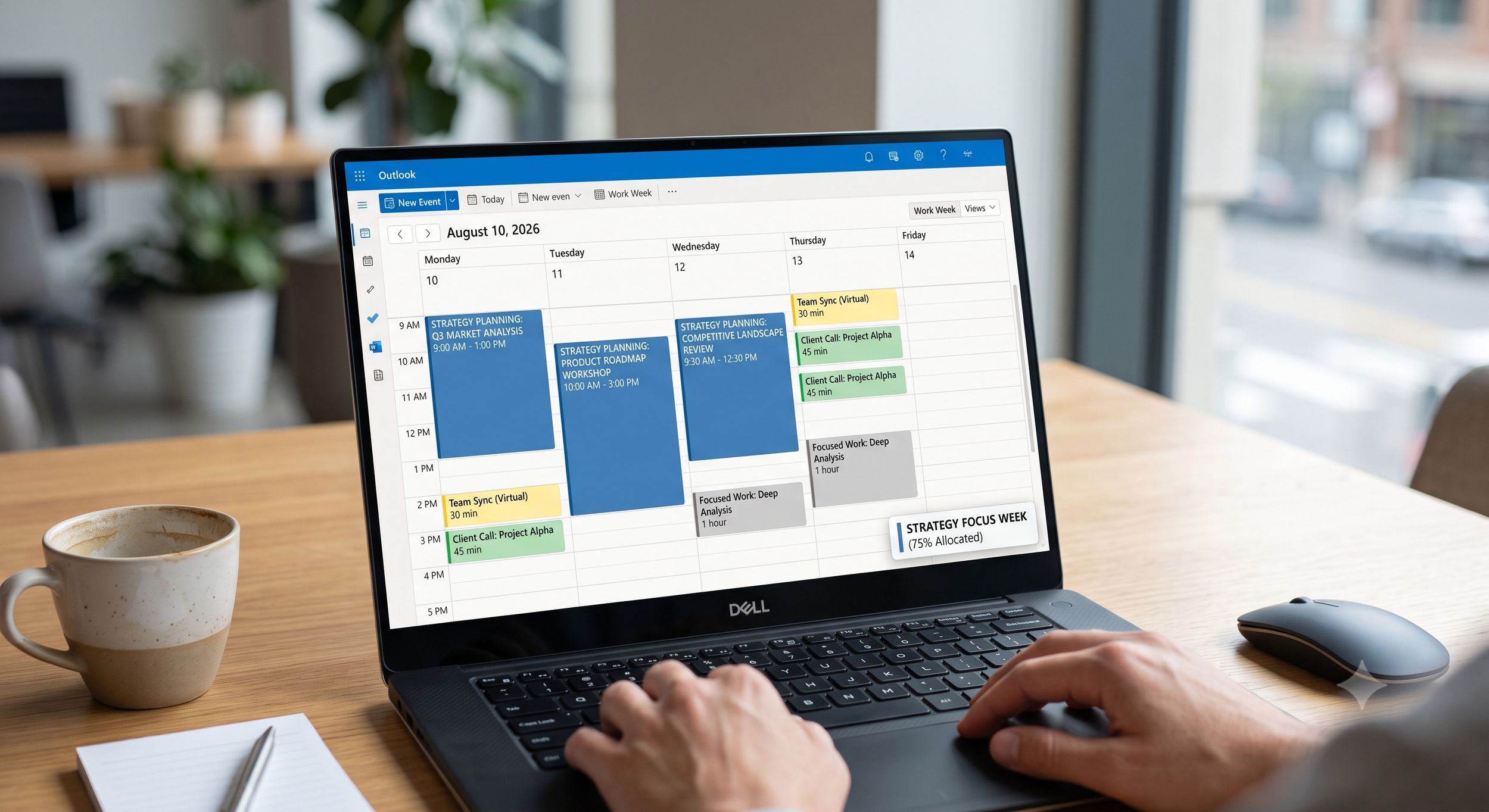
Instead, create a week whose shape you chose.
Decisions clearing below you instead of queuing on your desk. A function that keeps running the week you are unreachable. Two uninterrupted hours that exist on purpose rather than by accident. Time going to the three things you would name if someone asked what mattered this quarter.
You stop being the person everything routes through, and become the person who designed how it runs.
Start with the measurement. Talk through the results.
First, complete the Executive Operating Index
Fifteen questions, five minutes, and your score appears immediately. No email required to see it. Click here to take the Executive Operating Index.
Then, talk through the results.
If your result is interesting and you want to go deeper, I run a limited number of sessions where we walk through what your scores suggest and what I would look at first.
Thirty minutes, free while I am building the research behind this, no pitch. Reach out to me to schedule a time to talk.
Not ready for the assessment yet? Start here instead.
Every other Tuesday, one piece of an executive's operating system taken apart: how it actually works, why it breaks, and one change you can install that week. Written from inside the job by a working Chief of Staff.
Three minutes to read. Every issue has a number in it.
For VPs, founders, and anyone whose week is being spent by other people. No pitches, no motivation. Unsubscribe in one click.